|
 |
before
〈かたい古民家を残す〉
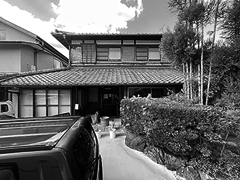
本計画は、京都市北部・岩倉に建つ古民家のリノベーションである。
来歴は明確ではないが、明治期に建てられた農家住宅と推定される。
文献調査によれば、この建物は「岩倉型民家」の形式に合致しており、江戸後期~明治期の建築と考えられる。
さらに登記簿謄本や建築調査により、1970年代に増改築が行われたことも判明した。
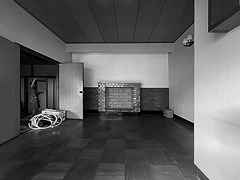
その改修では、外壁や洋間に多くのタイルが用いられており、
調査の結果、岩倉を拠点とした「大仏組」による「大仏タイル」であることが分かった。
今回のリノベーションでは、不要となるタイル造作物を京都・下鴨ロンドにサルベージを依頼している。
新しい住人は 30 代の夫婦と子ども 1 人 の家族である。計画にあたり、
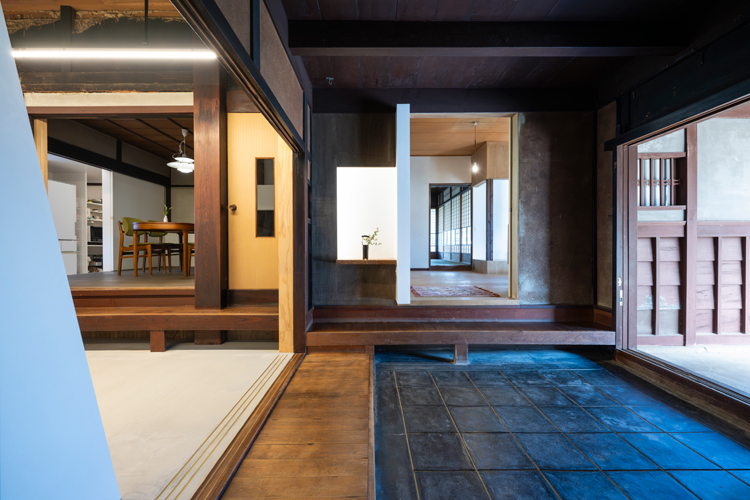
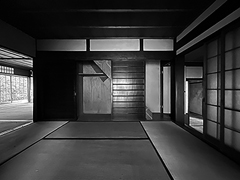
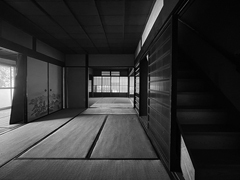
オクザシキとクチザシキはできるだけ手を加えず修理にとどめ、土間を中心としたキッチ ン・水回りの改修を重点とした。
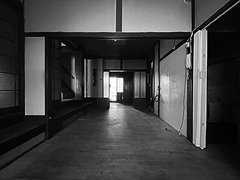
かつて南北を貫いていた土間は、1970 年代の改修でプリント合板の床に変えられていたが、
今回再び土間として復元し、周囲に断熱改修を施している。
広すぎる土間には 3 つのボリュームを土間にはみ出すように配し、それぞれの居場所の使い方に変化をもたらす構成とした。
その一つである「望楼」は、特定の機能を持たないが、
子どもの遊び場であり、民家の梁に近づき、床から浮揚した新しい視点場となっている。
このリノベーションは、建築の大部分をスケルトンにし、新しい機能を当てはめるようなリノベーションではない。
むしろ古民家の「型」を理解し、その上に少しだけ新しい要素を追加することで、
既存空間を現代の機能にフィットするようにチューニングしていく試みである。
"Preserving "tough" old folk houses"
This project is the renovation of a traditional farmhouse located in Iwakura, in the northern part of Kyoto.
Although the exact history of the house is unclear, it is believed to have been built in the Meiji period.
Research indicates that it follows the “Iwakura-style” of vernacular housing, a typology common from the late Edo to early Meiji eras.
Records and surveys also revealed that the house underwent alterations in the 1970s,
when many tiled finishes were added―identified as “Daibutsu tiles”
produced by a local builders’ group known as Daibutsugumi based in Iwakura.
In this renovation, unneeded tile elements were carefully salvaged
in collaboration with Shimogamo Rondo, a local architectural recycling initiative.
The new residents are a couple in their thirties with one child.
The renovation focused on restoring the doma (earthen floor) and reorganizing the kitchen and wet areas around it,
while keeping the traditional okuzashiki and kuchizashiki rooms as intact as possible.
The original doma―once running north to south through the house―had been replaced with plywood flooring in the 1970s,
but it was revived in this project with new insulation applied to its periphery.
Three new volumes were inserted to partially extend into the doma, creating subtle variations in how each space is used.
One of them, called the “watchtower,” serves no fixed purpose:
it is a child’s play area, a floating platform close to the old beams, offering a new viewpoint within the house.
Rather than stripping the building down to its skeleton and fitting in new programs,
this renovation sought to understand the “form” of the old farmhouse
and to tune it gently to contemporary life by adding only a few new elements.
It is a work of adjustment rather than replacement―an attempt to let the old structure and new life resonate together.
|